

Search visibility is the missing revenue layer in most fashion brands. While social feeds fill the top of the funnel, search captures buyers who already know what they want: a linen wrap dress, waterproof winter boots, or a festival outfit that fits. In fact, 68% of online shopping journeys begin with a search engine, and fashion-related queries now account for over 15 billion global searches annually. Organic listings receive 53% of all clicks, proving they outperform paid ads in trust and engagement. Yet, many clothing retailers still underinvest in search.
This guide introduces a proven SEO framework for clothing brand framework tailored for fashion retailers seeking sustainable growth. With the proper technical structure, rich content, optimized product pages, and cross-market visibility, organic search becomes a demand engine that compounds over time. Whether you’re launching new collections or scaling globally, this approach helps turn high-intent traffic into loyal customers, without overspending on paid acquisition.
Why Search Is the Most Reliable Growth Channel for Fashion Brands
Search-driven intent outperforms social scrolls. A shopper typing “black wool overcoat slim fit” is far closer to purchasing than someone liking a fashion reel. SEO allows your brand to meet this demand without the volatility of paid ads. While paid CPMs in fashion ecommerce have climbed 34% year-over-year, organic traffic offers compounding ROI over time. More importantly, search provides full-funnel visibility: from inspiration queries to brand comparisons to specific SKUs. For brands expanding globally, SEO creates a consistent structure across languages and markets.
Platforms like Google and Bing remain dominant entry points, even in mobile-first regions. Prioritizing SEO as an always-on acquisition strategy ensures your most profitable customers find your products, no matter where or how they search. It also builds resilience across algorithm shifts, giving brands more control over visibility, margin, and customer journey.
1. Build Keyword Clusters Based on Real Buyer Intent
An effective keyword strategy for fashion brands begins with decoding how buyers speak. You need more than volume; you need context. Segment keywords into clusters based on shopper goals: category-driven (“linen jumpsuits”), attribute-based (“cropped puff sleeve”), use-case-specific (“winter jacket for Norway trip”), and solution-focused (“plus size travel dress no wrinkle”). Every product category in your catalog should have an aligned keyword cluster with one high-volume parent phrase and 5–10 supporting modifiers. Instead of chasing broad terms like “summer dress,” target “sleeveless cotton summer dress for beach.” Use internal search logs, Google Search Console, and voice search transcripts to extract customer phrasing.
Organize your keyword lists into shared docs by season, product line, and market. Assign clusters to individual collection or editorial pages to prevent cannibalization. A structured SEO strategy maps shopper language to your site’s architecture, boosting organic visibility while aligning with how customers naturally search for apparel.
2. Design Your Collections Like a Stylized Sitemap
Your site’s collection architecture is how Google and shoppers understand your catalog. Clothing brands often bury strong product segments under ambiguous titles like “Essentials” or “What’s New.” Instead, anchor your navigation in search-friendly, descriptive labels: “Slim Fit Chinos,” “Linen Midi Dresses,” “Petite Officewear.” Every category and subcategory should have a dedicated URL, H1, and intro paragraph that reinforces intent. Use breadcrumb navigation and internal links to connect collections with their parents, siblings, and top-performing products. Implement canonical tags and noindex rules on filtered pages to avoid duplicate content.
Monitor indexation via Google Search Console to identify crawl waste. Collection pages should not act as placeholders—they should educate. Include short descriptions, feature callouts, and a 3–5 FAQ section with schema. This approach aligns UX with SEO for fashion ecommerce, helping your brand rank for both head terms and long-tail variants while improving shopper experience across devices.
3. Turn Every Product Page Into a Mini-Landing Page
A high-performing product page satisfies both user and algorithm. Start with original, benefit-driven product descriptions that include fit, feel, fabric, origin, and ideal use. Provide garment measurements, model dimensions, and a size guide tailored by region (US, EU, UK, AU). Embed rich media: multi-angle images, on-body video clips, and texture closeups. Add a “Style it with” section featuring complementary products, and user-generated content when possible. Use schema markup to display star ratings, price, availability, and shipping details in search results. Place trust signals near the cart: shipping timelines, returns window, and secure checkout badges.
Include a dynamic FAQ section with answers sourced from customer inquiries. Every product should have unique metadata, URL slugs, and alt text for images. Use A/B testing tools to experiment with CTA phrasing and media formats. Treat every product as a standalone landing page optimized for both ecommerce SEO and conversion.
4. Create Guides That Solve Specific Shopping Questions
Content should eliminate decision friction. SEO guides are not blog fluff—they are buying tools. Focus on real questions: “What to Wear to a Fall Wedding,” “How to Pack Stylishly for a Two-Week Trip,” or “Best Clothes for Hot Humid Weather.” Use short intros followed by image-rich sections with curated outfit ideas and shoppable links. Answer key user concerns: outfit function, layering strategies, fabric breathability, and packing efficiency. Add a comparison table where appropriate (e.g., linen vs. cotton vs. viscose). Break content into sections with keyword-rich H2s and include a 3–4 question FAQ with structured data. Each guide should link internally to relevant collections, individual products, and sizing resources
Use Shopify or WooCommerce content blocks to embed real-time product availability. Create evergreen URL slugs for each guide to build authority over time. Optimize titles and meta descriptions to boost CTR from SERPs. Strategic content boosts visibility for clothing search optimization and improves time-on-site.
5. Optimize for Google’s AI Overviews and Rich Snippets
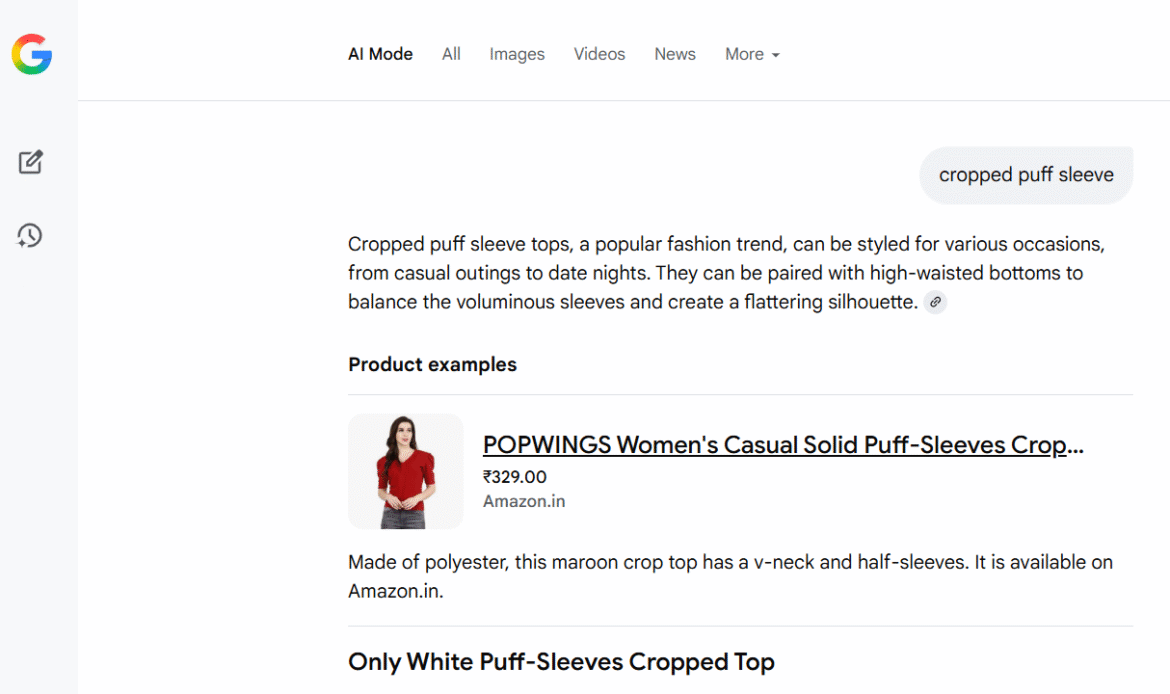
Google’s AI Overviews and rich snippets have changed the way brands appear in SERPs. To earn placement, structure your content with question-and-answer formatting. Include direct, fact-based responses within 100 words of each section header. Use schema markup for FAQ, product, review, and how-to content to qualify for enhanced visibility. AI Overviews reward topical depth and citation-backed claims, so include links to credible sources when discussing sustainability, manufacturing, or fashion trends. Ensure author bios display E-E-A-T (Experience, Expertise, Authority, and Trustworthiness).
Design content modules that can be reused in multiple formats: paragraphs, bullets, and visuals. Add jump-to links for mobile readers. The best-performing pages offer concise summaries and detailed deep dives. Test how your content appears using Google’s Rich Results Test tool. With smart formatting and structured data, your apparel SEO pages become eligible for high-impact featured placements.
6. Improve Speed, Crawlability, and Mobile UX
Site speed and crawl health directly impact both rankings and conversion. Fashion brands often use heavy images, auto-play videos, and dynamic filters that slow mobile pages. Run regular performance audits using PageSpeed Insights and Lighthouse. Prioritize fixes for Core Web Vitals, especially Interaction to Next Paint (INP). Use lazy loading for below-the-fold media, preload hero images, and serve assets in WebP or AVIF formats. Host product videos on lightweight players or third-party CDNs to prevent render-blocking. For crawlability, block infinite parameter-based filter combinations and use robots.txt to prevent duplicate indexing.
Maintain a clean XML sitemap with only canonical URLs. Use internal linking to ensure orphaned product pages are reachable within three clicks. Run mobile usability tests to identify touch target errors or menu bugs. Mobile-first indexing means poor UX on handheld devices erodes rankings. Technical optimization is foundational for scalable SEO for fashion brands aiming to grow globally.
In a Nutshell
Search defines how your next customer finds you. For a clothing brand, visibility is not only a function of aesthetics or storytelling. It depends on whether your products appear when intent meets opportunity. Every well-structured page, every optimized category, and every relevant query aligned with your inventory moves the business forward.
Growth comes from consistency. When content, structure, and performance are connected to how people search, results follow. Brands that invest in this capability see compounding advantages over time, across markets and channels.
1st Genix delivers the systems and execution required to support that growth. Our team builds the frameworks, manages the rollout, and ensures every page performs. If your goal is to expand your presence, grow revenue through search, and lead in your category, this is where it begins.
Connect with us at www.1stgenix.com or email team@1stgenix.com The next phase of your digital performance starts with the right structure.